Issyk-Kul from Kazakhstan: the route, the budget, where to stay
Issyk-Kul is the nearest sea to Almaty, if you count a large mountain lake with sandy beaches as a sea. The journey takes a day and the result feels like a real holiday rather than a trip out of town. That is exactly why the destination has stayed at the top of the Kazakh summer for decades.
Here is the practical part: how to get there, how the north shore differs from the south, when to go, what a week costs, and what to allow for at the border.
In short
The season runs late June to late August. The water warms up by July.
The north shore is infrastructure, the south is nature. Two different holidays.
From Almaty it is 350–450 km depending on the shore, six to nine hours including the border.
Citizens of Kazakhstan need no visa, but a passport is mandatory to cross the border.
A week for two runs roughly ₸300,000–700,000.
What is here
- Why people come
- North shore versus south
- The drive and the border
- The season
- Where to stay
- A week's budget
- How a day at the lake works
- What to see
- Money, phone signal and the details people forget
- The border: how to get through it quickly
- Frequently asked questions
At a glance
| What | What for | Price guide | Where |
|---|---|---|---|
| Pansionat, simple room | On a budget | from ₸15,000 a night for two | North shore |
| Mid-range hotel | Comfort | ₸30,000–70,000 a night | Cholpon-Ata and around |
| Guest house | Quiet, nature | ₸15,000–35,000 a night | South shore, Karakol |
| Driving | Freedom | ₸25,000–45,000 return | 350–450 km |
| Minibus or transfer | Without a car | from ₸8,000 per person | From Almaty |
Guide figures for the 2026 season. In July prices on the north shore are noticeably higher than in June and late August.
Why people come
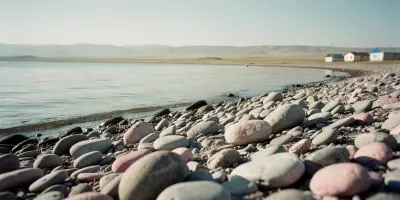
Three reasons, and the first is the water. Issyk-Kul is slightly saline and warm enough in July and August, and unlike the Kazakh lakes its beaches are sandy in many places. For anyone tired of shingle, that is the decisive argument.
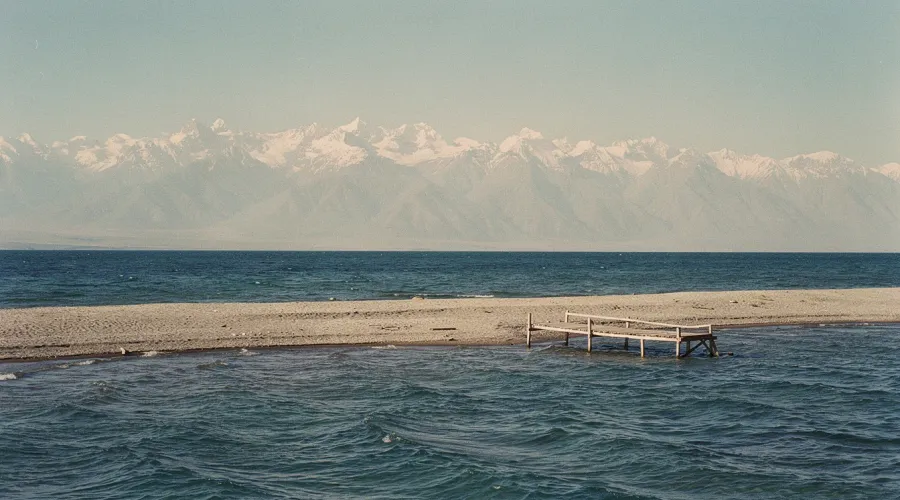
The second is scale. The lake is large; from one shore the opposite one shows as a band of mountains on the horizon. The sense of space here is closer to the sea than to a lake.
The third is the mountains around it. Snow-covered peaks above a beach in July is a picture hard to get anywhere else within a day's drive.
North shore versus south
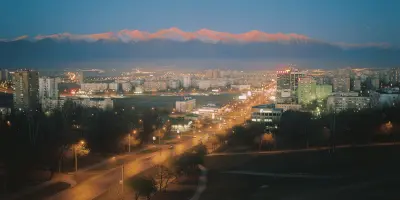
The north shore is Cholpon-Ata and all the tourist infrastructure: pansionats, hotels, cafés, water parks, a promenade, evening life. The beaches are better equipped and the water warms up more. The downside is that July is crowded, with prices to match.
The south shore is quieter, cheaper and greener. There is less infrastructure but nature is closer: the mountain routes start here, and so do the gorges and canyons. The water is slightly cooler. For people who aren't only coming to lie on a beach.
Karakol in the east is a story of its own: a town with a historic centre, a base for mountain trekking, and a convenient point from which to explore the eastern end of the lake.
Tip: the optimal week is four nights on the north shore for the beach and three on the south or in Karakol for the nature. Moving between them takes a few hours.
The drive and the border
The route from Almaty runs through Korday towards Bishkek and then along the Chu river to the lake. It is roughly 350–400 kilometres to Cholpon-Ata, and further to the south shore and Karakol.
Real journey time is six to nine hours, and the spread is almost entirely about the border. On peak days, especially at weekends in high season, the queue at the crossing can take several hours. Better to set off at night or early in the morning.
What you need at the border: a valid passport. Citizens of Kazakhstan need no visa to enter Kyrgyzstan, but a passport is mandatory — an internal ID card is not enough to cross a state border. If you are driving your own car, carry its documents and insurance; check the current motor-insurance requirements in advance.
Without your own car: minibuses run from Almaty and there are organised transfers. Cheaper, but it ties you to a timetable and leaves you without transport once there — and the distances around the lake are considerable.
Important: border-crossing rules and document requirements change. Before travelling, check official sources — the border service and consular information — rather than last year's social media posts.
The season
June. The water is still cool, the greenery is fresh, there are few people and prices are low. Good for those coming for the mountains rather than for swimming.
July. The peak. Warm water, everything open, but the north shore is full and accommodation prices are at their highest.
August. The best month. The water holds its warmth, and by the second half the flow of people is already falling.
September. Too cool for swimming, but the best time of year for mountain routes: clear, dry, empty.
Where to stay
A Soviet-type pansionat. From ₸15,000 for two. Simple rooms, often with meals included and a private stretch of beach. The standard varies enormously — read the reviews carefully.
A modern hotel. ₸30,000–70,000. Concentrated in and around Cholpon-Ata. Air conditioning, a pool, decent service.
A guest house. ₸15,000–35,000. The main format on the south shore and in Karakol. A homely atmosphere, often with breakfast, and hosts who usually help with routes and transport.
What to check: the distance to the water, whether there is air conditioning, whether meals are included, whether cards are accepted. You will need cash either way — smaller places may have no card terminal.
A week's budget for two
| Item | Economical | Comfortable |
|---|---|---|
| Accommodation, 7 nights | ₸120,000 | ₸350,000 |
| Travel there and back | ₸30,000 | ₸50,000 |
| Food | ₸90,000 | ₸180,000 |
| Excursions and activities | ₸40,000 | ₸100,000 |
| Total | about ₸280,000 | about ₸680,000 |
On currency: it is easier to pay in the local one. Exchange rates in town bureaux are usually better than at the border and in hotels.
How a day at the lake works
Issyk-Kul is a mountain lake, and its daily rhythm follows from that. The morning is still and cool: the water like a mirror, the air fresh even in July. By ten it is hot, by midday the wind usually gets up, and towards evening everything calms again.
Hence a practical consequence that arrivals usually discover only on day three: swimming is more comfortable before eleven and after five. The middle of the day is for shade, lunch and — if you have a car — a drive into the mountains, where it is ten degrees cooler.
The second thing worth knowing: the water is colder than you expect from "the Kazakh sea". Issyk-Kul doesn't freeze, but nor does it warm to bath temperature — in July and August on the north shore it is around twenty-two to twenty-four degrees. It invigorates rather than relaxes, and most people's first entry into the water is a short one.
The third is the sun. The altitude is over one and a half kilometres, the air is thin, and the ultraviolet is noticeably stronger than on the plain. You can burn here in an hour, overcast days included, and it is the commonest misfortune of a first day.
Important: high-factor sunscreen and a hat aren't a recommendation but a condition. Mountain sun over water works like a double dose.
What to see
The Grigorievskoye and Semyonovskoye gorges — the most accessible mountain outings from the north shore, a day each.
Skazka Canyon on the south shore — red rock formations right by the water, a short walk with a strong impression.
Jeti-Oguz near Karakol — the famous red cliffs and the gorge.
Karakol — the historic centre, wooden buildings, the local market. A good pause between beach days.
Hot springs at several points around the lake — they work in cool weather too.
Money, phone signal and the details people forget
Currency. It is easier to pay in the local one. Rates at exchange bureaux in the towns are usually noticeably better than at the border and in hotels; don't change the whole sum at the crossing. Cash is always needed: guest houses, markets, taxi drivers and most excursions take no cards.
Phone signal. Roaming works but is expensive. A local SIM is cheap and covers both shores; in the mountain gorges there may be no signal at all, which is worth allowing for if you are going out for a whole day.
Getting around. Minibuses run between the villages, but the timetable is notional. Taxis are everywhere; agree the price before getting in, as there are no meters. If you are planning gorges and canyons, a car considerably expands the trip: the distances around the lake are substantial.
Food. Simple, cheap, and the portions are large. Be careful with dairy in the heat and with tap water — better to drink bottled.
First-aid kit. Something for sunburn, painkillers, something for an upset stomach, plasters. There are pharmacies in the towns but not in every village, and not around the clock.
Electricity. The same sockets as at home, but in the private sector cuts happen. A power bank won't go amiss.
The border: how to get through it quickly
The spread in journey time — six hours or nine — is almost entirely about the crossing. A few things shorten it more reliably than any detour.
Time of day. Night and early morning are the freest hours. Leaving Almaty at four or five usually means crossing with almost no queue. A Saturday daytime arrival at the height of the season is the opposite scenario.
Day of the week. Friday evening and Saturday morning are the peak towards the lake, Sunday evening the peak back. Shifting to weekdays saves hours, not minutes.
Documents ready. Passports in every passenger's hand, car documents and insurance separate rather than buried in the boot. It sounds like a detail right up to the moment a queue is held up by one car.
Passport validity. Checked in advance, not on the approach. An expired document is the one reason a trip ends at the crossing.
Children. If you are travelling with minors, the document requirements are separate and change from time to time. Check them on the border service's official resources rather than on someone else's experience from last year.
Tip: build two hours of slack into the plan for each direction. If the crossing goes quickly you arrive early, which is pleasant; if it doesn't, your check-in doesn't collapse.
Safety and arrangements
- A passport, not an internal ID card. Check the expiry date.
- Travel medical insurance — inexpensive, and it removes the main risk.
- Accommodation booked with written confirmation and clear cancellation terms.
- Cash is essential: cards aren't accepted everywhere.
- If the trip is a joint one, agree the budget, the accommodation and the cancellation terms in advance, and handle payment through safe payment. A full list of what is worth settling: travelling together.
- On mountain routes, stay on marked paths and carry spare water.
Planning a trip to the lake for two?
Some profiles mark themselves open to travelling and list their free dates.
See profiles in Almaty · Create an account
18+ · Verified profiles · Safe payment
Frequently asked questions
How long is the journey to Issyk-Kul from Almaty?
350–450 km depending on the shore, realistically six to nine hours including the border. At the peak of the season the queue at the crossing can add several hours.
Do citizens of Kazakhstan need a visa?
No, but a valid international passport is needed to cross the border. Requirements change from time to time — check official sources before setting off.
Which shore should I choose?
The north if you want an equipped beach and infrastructure. The south if nature, quiet and price matter more.
When is the water warmest?
July and the first half of August. In June the water is still cool; in September swimming is cold, but for the mountains it is the best month.
Is the water in Issyk-Kul warm?
In July and August on the north shore it is around twenty-two to twenty-four degrees. It invigorates rather than relaxes: this is a mountain lake and it doesn't warm to bath temperature.
What does a week for two cost?
Roughly ₸280,000 economically and about ₸680,000 comfortably, including travel, food and excursions.
To close
Plan Issyk-Kul for the second half of August, leave at night because of the border, and split the week between the two shores. What you get then is a rare combination: a sandy beach, warm water and snowy peaks in one frame — a day's drive from Almaty.
Written by
Purr Club editorial
Lifestyle Editor
Writes about the best venues for dates, travel and urban culture.
Ready to Find Your Companion?
Browse verified profiles with real photos. Free registration, instant access.
All profiles verified Real photos only Safe deals with escrow